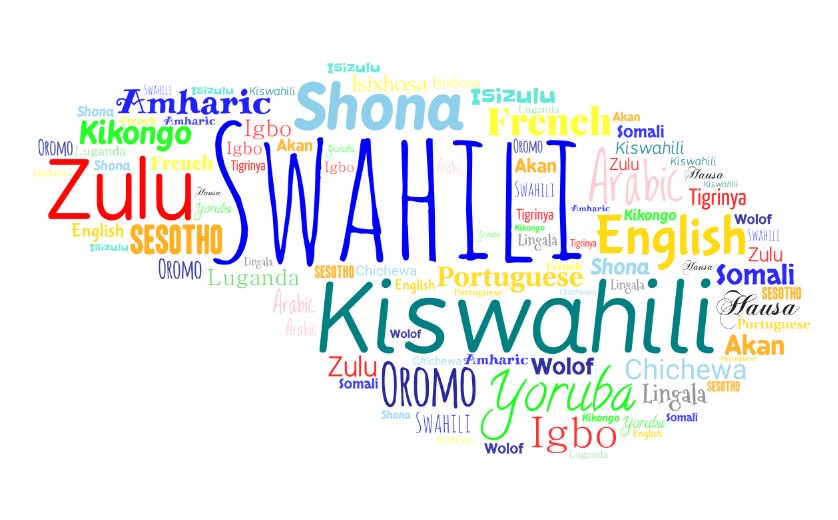
In his heydays Nelson Mandela said:"If you talk to a man in a language he understands, that goes to his head. If you talk to him in his language, that goes to his heart," and that dawn recently at the 39th Summit of the Heads of State and Government of the Southern African Development Community (SADC), members' meeting in Tanzania adopting Kiswahili for their nationals and administrative affairs.
This is a language that is officially a dialect at the African Union (AU), and the lingua franca in most of East Africa and parts of Central and Southern Africa now.
Delivering his speech in Kiswahili as the Chairman of the SADC in Dar es Salaam, Tanzania President Dr. John Magufuli made it clear that his country was willing and ready to provide the 15 member states with teachers and tutors to expand the language in the regional bloc.
Before a while visiting President South Africa, Malawi, Namibia and Zimbabwe, he openly showed willingness that Tanzania would provide them with teachers and books in the language.
In response, South Africa's President Cyril Ramaphosa gave the idea a go-ahead including his counterpart, Namibia's Head of State, Dr Magufuli showing interests.
It is a good news that South Africa has already declared to start teaching Kiswahili in its Secondary Schools and some higher learning institutions effective next year.
In East Africa 2017, Rwanda resolved to introduce Kiswahili in its school curriculum following the government's moves to adopt it as an official language.
With the background and the language being the fourth official language after English, French and Portuguese in SADC, it is upon Tanzanians to make sure that the language is taught to the areas professionally, because it is their baby.
That comes with the culture of restoring reading habit, because if one does not read chances of growing and acquiring new terms and developing the language would meet embrace the reading culture for their own to stay informed and for national betterment.
Mwalimu Julius Nyerere, the founding Father of this Nation, once said: " Books are very important way to knowledge and to self-improvement; from them we can learn new ideas; new techniques of working and new methods.
We can learn about the development of men in all its different aspects; we can broaden our understanding of other peoples and even of ourselves. All the experiences of mankind, all his discoveries and his inventions can be learnt about through reading," hence the ball is in our court as Tanzanians to either groom the baby (Kiswahili) or maim it.